

Regional airport transportation: access, waiting areas and rides
A regional flight is only one part of the journey. Regional airport transportation connects passengers from smaller airports to nearby communities and wider travel networks, with taxis and limousines offering road connections for the next leg. The terminal experience and the ride beyond it both affect how smoothly you reach your destination.
Getting to a regional airport may seem straightforward, but the arrival experience depends on practical details: where to wait, how to meet your ride and what to expect when flight schedules are limited. A clear plan helps you leave the terminal calmly and continue your trip with less uncertainty.
This guide explains how regional airports connect communities, what passengers can expect in airport waiting areas, and how to plan onward travel by taxi or limousine. You’ll find practical guidance on access, terminals and ground transportation to help you arrange your trip before travelling.
Key Takeaways
- Plan the trip beyond the runway: regional airports link communities to wider travel networks, while local road connections complete the journey.
- Before landing, note where the terminal’s waiting area and ground-transport pick-up points are located.
- Choose a taxi or limousine based on your destination, luggage, comfort preferences and need for a direct ride.
- Transportation costs depend on factors such as distance, service type and trip arrangements, so compare the details that matter to your journey.
- For travel to or from your terminal, explore local airport transfers or a longer-distance JAMALimo car service for onward travel.
Regional airport connectivity and accessibility
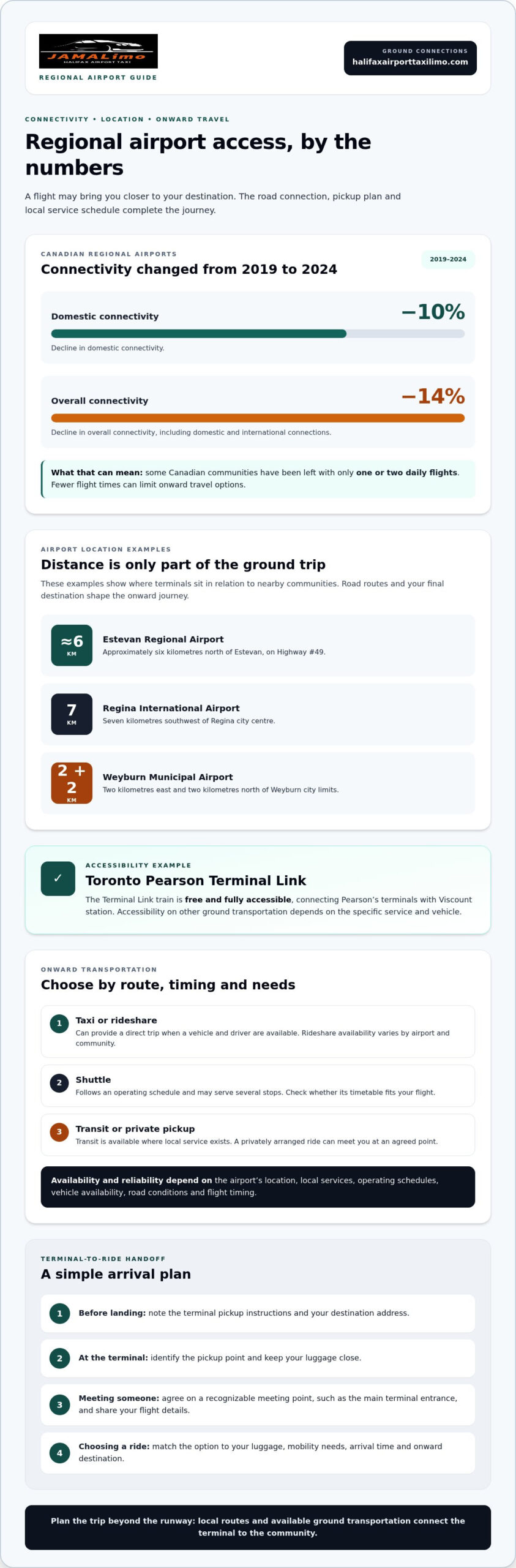
Regional airport connectivity is the way an airport links a community with other destinations and transport networks. In Canada, regional airports connect remote areas to broader networks for the movement of people and goods. That role extends beyond passenger flights: airport access can support local business and visitor travel. However, flight options have changed. Canadian regional airports experienced a 10% decline in domestic connectivity and a 14% decline in overall connectivity, including domestic and international connections, from 2019 to 2024.
Regional access means the road, transit or other ground connection between an airport and the communities it serves. A regional flight may bring you closer to your destination, but the onward trip still depends on local routes and available ground transportation. Some Canadian communities have been left with only one or two daily flights as regional air service has declined. Plan how you’ll reach the airport and continue from it, especially when fewer flight times limit your options.
Airport location describes where a terminal sits in relation to nearby communities, roads and destinations. For example, Estevan Regional Airport is approximately six kilometres north of Estevan on Highway #49. Regina International Airport is seven kilometres southwest of Regina city centre, while Weyburn Municipal Airport is two kilometres east and two kilometres north of Weyburn city limits. These examples show why a map alone may not tell the full story: the road route and the location of your final destination shape the ground journey.
Airport accessibility describes how easily passengers with different mobility needs can use the terminal and continue their journey. Some airport transportation connections are accessible for passengers with disabilities. Toronto Pearson Airport’s Terminal Link train is free and fully accessible, connecting its terminals with Viscount station. Accessibility on other ground transportation depends on the specific service and vehicle.
An international airport connection links local travel with a wider network of domestic or international destinations. Toronto Pearson Airport is an example of a major hub connected to regional transit lines and major highways. These connections can help passengers transfer between air travel, local transit and road journeys. For regional communities, accessible road links connect airports with workplaces, visitor destinations and essential services.
Economic access describes how reliable air links help people and businesses reach markets, clients and visitors. Regional airports can attract tourism and business travel, supporting local economies through visitor spending and better access to clients. Before travelling, identify the airport’s community, the terminal entrance and your onward destination. Map the road connection and arrange ground transportation to match your flight time.
Passenger waiting areas and ground transportation
A passenger waiting area is the terminal space where travellers wait before boarding or meeting a ride. Use it to regroup, check flight information and organize the next part of your journey.
At a regional airport, the terminal may be the handoff point between air and road travel. Before leaving the waiting area, identify your pickup point, keep your luggage close and confirm the destination address. These steps can prevent confusion when several vehicles arrive or passengers leave after the same flight.
Transportation options to and from regional airports
Ground transportation connects an airport with nearby communities by road or transit. Depending on the airport, options may include taxis, rideshares, shuttles, local transit and private pickups.
Which transportation options serve a regional airport or city in Canada? Common choices include taxis, rideshares, airport shuttles, transit where available and privately arranged rides. Options at a specific airport depend on its location, local services and operating schedules.
Plan your transfer as part of your flight itinerary. Note the terminal’s pickup instructions and your destination, then match the ride to your luggage, mobility needs and arrival time. For example, if you’re travelling beyond the airport community, a direct car ride may be simpler than a route requiring several transit changes.
Waiting areas also help passengers coordinate with people meeting them. Agree on a recognizable meeting point, such as the main terminal entrance, and share your flight details with your pickup person. That way, both sides have a clear plan if you need extra time to collect your bags.
Shuttle, taxi, and rideshare reliability
Transportation reliability describes how consistently a service collects passengers and completes trips as planned. A shuttle follows its operating schedule and may serve several stops. A taxi or rideshare provides a direct trip when a vehicle and driver are available.
How reliable are regional airport shuttles compared with taxis and rideshares? A scheduled shuttle has a defined timetable, while a taxi or rideshare can offer a more direct pickup when available. Reliability depends on how well the schedule fits, vehicle availability, road conditions and flight timing.
Are rideshare services available at regional airports in Canada? Availability varies by airport and community, depending on whether platforms operate locally and drivers are nearby. Don’t assume you can request a ride immediately after landing. Plan around the airport’s available transport options and your arrival time.
For any option, use the airport’s marked pickup area and match the vehicle to your booking or meeting arrangement. If you’re travelling through Halifax, Halifax airport arrival planning can help you consider the road connection after your flight.
Taxis and limousines
Taxis and limousines offer direct road transfers between an airport and your destination. They can connect a regional terminal with a hotel, home, workplace or another community.
Child seats and luggage on transfers
A child seat is a restraint selected to suit a child’s size and the vehicle’s seating position. Requirements vary across Canadian provinces and territories, so use a restraint suited to the child and follow the rules that apply to your trip.
When planning an airport transfer, account for children and luggage. Tell the transportation provider how many passengers are travelling, whether you need a child seat and how much luggage must fit. A family with a stroller and several suitcases may need a different vehicle arrangement than a solo passenger with one carry-on.
Keep essentials accessible during the ride, including medication, travel documents and a child’s comfort item. At the terminal, gather your bags before heading to the pickup point. This helps everyone load efficiently and reduces the chance of leaving belongings behind.
Checked bags may arrive separately from passengers. If a bag is delayed, update your pickup plan before leaving the terminal. Sharing the airline’s baggage information and your intended destination gives the driver a clearer picture of the transfer.
Shuttle, taxi, and rideshare costs
A transfer fare is the amount charged for a trip from an airport to a destination. The service type, distance, number of stops and whether the ride is shared can affect the total.
Shuttles may involve shared travel or set routes, while taxis and rideshares typically provide direct trips. Compare how each service handles the route, waiting time, luggage and extra stops, rather than looking only at the starting fare. If you’re travelling beyond the airport community, consider the full journey to your final address.
Rideshare prices may vary with demand and pickup location, while taxi fares can follow local fare structures. Airport shuttles may charge by route or seat. Check the fare arrangement before the trip, and factor in route changes or extra stops when comparing options.
Limousine service provides a private car transfer, often chosen for a direct journey or planned itinerary. For international air connections, allow time for customs, baggage collection and the drive to your next destination. These steps affect your schedule as well as your vehicle choice.
Late-night and early-morning transportation
Off-hour airport transportation is a ride arranged around a late arrival or early departure. Whether it’s practical depends on the airport’s operating schedule and which ground services run at that time.
What transportation is available late at night or for early-morning flights? Depending on the airport and local service hours, options may include a taxi, rideshare, scheduled shuttle or privately arranged ride. Match the pickup time to your flight plan and allow for travel between the terminal and your destination.
Before departure, save your pickup location and destination on your phone, and make them available offline. For a late arrival, identify the designated vehicle area before exiting the terminal. For an early flight, arrange a ride that gets you to the airport with enough time for airline check-in and baggage procedures.
Regional flight schedules can leave fewer convenient departure times in some communities. If your flight requires a very early road transfer, plan around the airline’s check-in window and likely road conditions. A clear pickup time and address make the connection easier to manage.
What transportation options are available to and from regional airports in Canada?
Ground transportation connects an airport with its surrounding community by road or transit. Depending on the airport and local service network, Canadian travellers may use taxis, rideshares, shuttles, local transit, private pickups or rental vehicles.
A taxi is a direct ride provided by a driver for a fare. A rideshare is arranged through a digital platform, while a shuttle generally follows a set route or schedule. Local transit connects public stops, and a private pickup is arranged with someone travelling to meet you.
Each option suits different trip needs. A taxi or private pickup can take you directly to a specified address. A shuttle may work well if your destination is on its route. Where available, transit can connect the airport with town or city routes. For example, Toronto Pearson Airport connects with regional transit lines and major highways, offering several ways to continue beyond the terminal.
- Taxi: Choose a direct vehicle journey when reaching a specific address matters more than making several stops.
- Rideshare: Use a platform-based trip where local drivers serve the airport and its pickup area.
- Shuttle: Consider a scheduled or shared ride when its route and departure timing suit your destination.
- Local transit: Use public routes for connections between an airport and nearby communities where transit serves the terminal.
- Private pickup: Coordinate a meeting point with family, friends or colleagues before leaving the terminal.
Regional airports can be some distance from the communities they serve, so plan the ground leg separately. Regina International Airport is seven kilometres southwest of Regina city centre. Even if your flight reaches the city, you’ll still need to consider the road connection to your final address.
Airline schedules can shape your transfer choice. Some Canadian communities have only one or two daily flights as regional air service has declined. Match your onward ride to your arrival time, baggage collection and distance to your destination. This matters especially when missing a connection could mean waiting for another flight.
In British Columbia, regional airlines including Pacific Coastal Airlines, Central Mountain Air and Tofino Air offer scheduled services around the province. If you book one of these flights, plan the ground leg separately: identify the arrival community, locate the terminal pickup area and choose a road or transit connection to your final destination.
To organize regional airport transportation, note the airport, arrival time, pickup point and destination before departure. Choose a ride that fits your route, baggage and schedule. This simple sequence helps connect your flight with the last leg of your journey.
Canadian customs requires pilots of private aircraft flying from a United States airport into Canada to notify it at least two hours before departure. Electric vehicle charging stations, including fast-charging options, are available at multiple locations across Pearson Airport properties.
Canada Border Services Agency customs is available at Niagara District Airport seven days a week. Niagara District Airport recognized Canadian Airports Safety Week from September 21 to 25, 2026. 21 airport authorities operate Transport Canada-owned National Airports System airports.
How much do regional airport shuttles, taxis, and rideshares cost in Canada?
An airport transfer fare is the amount charged for travel between an airport and a destination. In Canada, the cost depends on service type, route, distance, number of stops and trip arrangements. There’s no single national fare for regional airport rides, so compare the full journey rather than relying on a general estimate.
A shuttle fare is the charge for a seat or group trip along a route or between set locations. Shared service can divide the journey among passengers, while a dedicated trip may be priced differently. Check that the fare covers your intended stop, and consider how a fixed route affects travel time and distance to your final address.
A taxi fare is the charge for a direct trip in a licensed cab, calculated under the local fare structure. Distance and time on the road can affect the total, as can waiting or extra stops. A short ride from an airport into town differs from a longer drive to a community outside the airport area.
A rideshare fare is the amount shown for a trip arranged through an app. The quoted amount can depend on the route and current demand, so it may vary between pickup times. Compare the full ride to your destination, including changes or extra stops, rather than comparing only the initial estimate with another service’s starting fare.
To compare options, note the airport, destination and number of stops. Then consider whether the service is shared or direct, how much luggage you have and whether you may have to wait at pickup. A passenger travelling alone to a nearby town may prefer a different arrangement from a family going farther with several bags. These details affect the practical cost, even when two options look similar at first.
For a Halifax airport ride, the price depends on the case and is given after a quote request; distance, route, vehicle and trip arrangements affect the amount. Compare those details with your arrival plan so you understand what the journey covers. A shuttle’s set route, a taxi’s direct trip and a rideshare’s app-based fare are not always equivalent comparisons.
If you’re planning an airport ride in Halifax, request a Halifax transfer quote to discuss the trip details and receive pricing for that journey.
Regional airports are part of a broader network: Transport Canada owns 23 National Airports System airports and leases them to Canadian airport authorities. Transport Canada’s National Airports System airports are operated by 21 airport authorities. Transport Canada-owned airports include airports that offer local, regional or remote service. These details provide context when considering how an airport’s location and the destination affect the transfer being compared.
A private aircraft arriving in Canada from the United States and carrying no more than 15 people is covered by the CANPASS Private Aircraft program. The pilot of a private aircraft flying from a United States airport into Canada must notify Canadian customs at least two hours before departure. These requirements concern private-aircraft arrivals, rather than the cost of a shuttle, taxi or rideshare.
JAMALimo: Local Halifax Airport Transfers
JAMALimo provides Local Halifax Airport Transfers for passengers travelling to or from Halifax Stanfield International Airport. Choose this option for a direct road connection between the airport and a Halifax destination. Nova Scotia Airport Transfers serve journeys beyond the city, while Inter Provincial Car Service supports longer trips between provinces.
Licensed and insured drivers use sedans, SUVs and minivans, giving travellers different vehicle types for their transfer. JAMALimo also offers Halifax Tours for visitors planning time in the city. These services suit passengers who need onward car transportation rather than a public transit connection.
For a Halifax airport ride or a longer trip, visit halifaxairporttaxilimo.com.
Plan the road leg before your next flight
Plan the trip beyond the terminal as carefully as the flight itself. Before travelling, note your destination, pickup point, luggage needs and preferred arrival time. This helps you compare regional airport transportation options and choose a ride that fits your itinerary. It also gives you a clear starting point if your plans change.
For a Halifax journey, JAMALimo offers Local Halifax Airport Transfers and Nova Scotia Airport Transfers. Travellers continuing beyond Nova Scotia can consider its Inter Provincial Car Service. Choose the service that matches where you need to go, then share the trip details when arranging transportation.
Make your next airport connection easier to organize. Contact JAMALimo about airport transportation and take the next step toward planning your ride.