
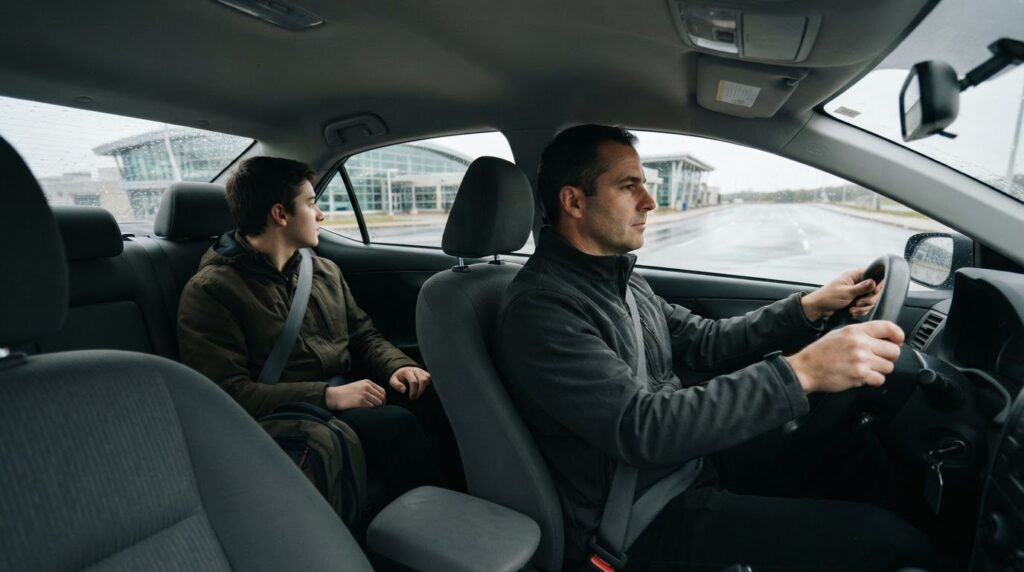
Safe student car service for reliable cars and discounts
A low purchase price doesn’t make a car safe for student life. A safe student car service starts with a reliable vehicle in good condition, with working brakes and lights, clear visibility, well-maintained tires, and safety features such as anti-lock brakes and electronic stability control. These basics matter as much as fuel efficiency and affordability.
Choosing a car can feel like balancing a tight budget with peace of mind. This guide explains what to look for in a reliable student car, how to ask about good-student insurance discounts, and which everyday habits can help keep a driving record clean. You’ll also learn how to plan an airport ride when driving isn’t the easiest option.
Key Takeaways
- Assess a student car by its safety features and condition, not just its purchase price or fuel economy.
- Learn which academic records may help students qualify for car insurance discounts and what policy details to consider.
- Build safer driving habits around visibility, braking and avoiding tickets or collisions to help protect your driving record.
- Find out when an airport taxi or interprovincial car service can make student travel simpler without driving your own car.
1. What are Safe and Reliable Cars for Students?
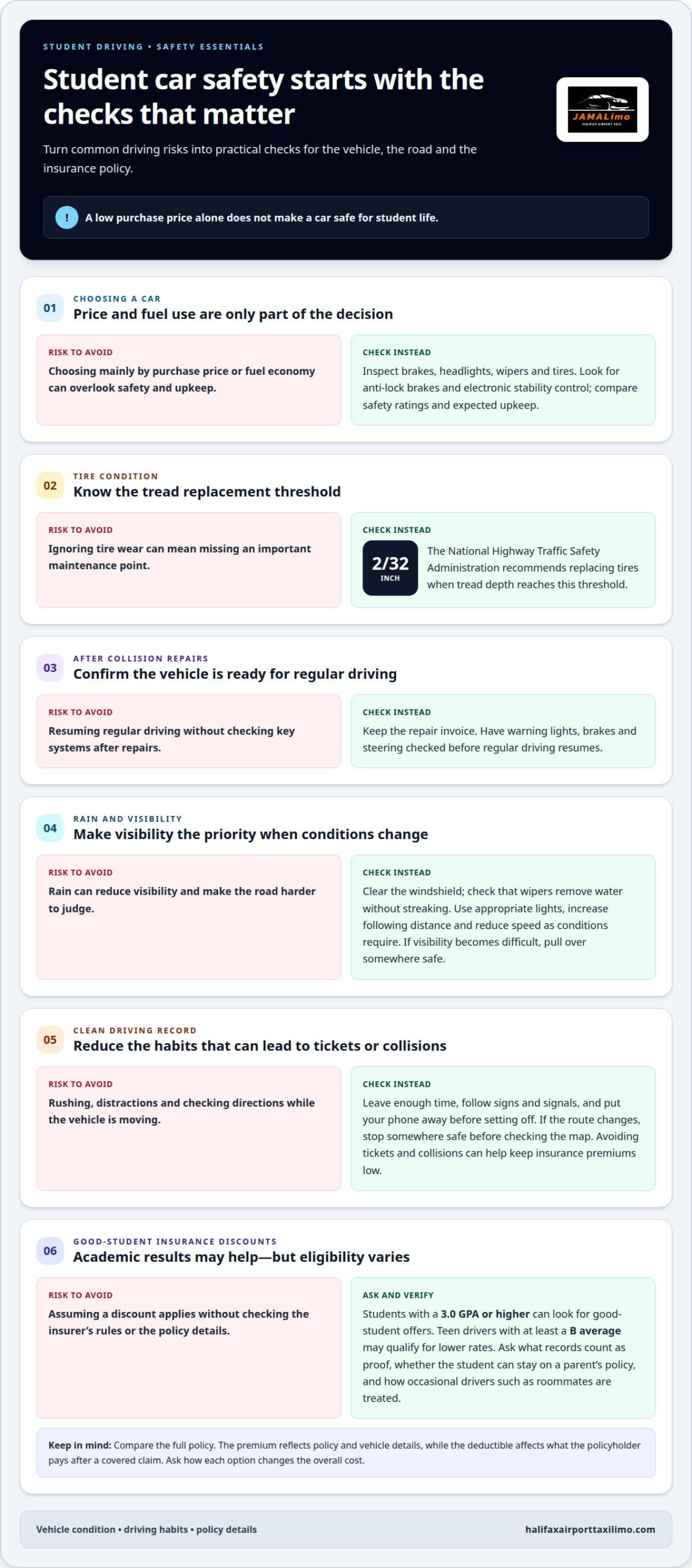
A dependable student vehicle balances safety features, maintenance needs, fuel use, and affordability. Check that the brakes, headlights, wipers, and tires work properly, and look for anti-lock brakes and electronic stability control. The National Highway Traffic Safety Administration recommends replacing car tires when their tread depth reaches 2/32nds. Parents can also compare a vehicle’s safety ratings and expected upkeep before deciding whether it fits a student’s budget. After collision repairs, keep the repair invoice and have warning lights, brakes, and steering checked before regular driving resumes.
Campus travel options differ in how they’re booked and priced. Uber and Lyft rides are requested through an app, taxis are booked as individual trips, and student shuttles generally follow set routes. Compare the fare, pickup arrangements, and whether the vehicle is shared. For any car service, check that seat belts work, windows are clear, lights function, and the vehicle is well maintained. Ask about safety features and child restraints if a passenger needs them.
To assess licensing and insurance in Canada, identify the applicable municipal or provincial regulator and compare its licensing information with the service’s documents. For a minor, a parent or guardian should arrange the ride directly and establish age, consent, and pickup requirements before travel. Book through an identifiable service channel, record the pickup point, and share trip details with someone you trust. Before boarding, match the driver and vehicle to the booking details. Use trip tracking if the service provides it.
Informal or unlicensed student transportation can leave passengers uncertain about accountability, vehicle maintenance, or insurance if a problem arises. Options near a university or college depend on the campus and local transportation, so match routes and pickup points to the student’s actual destination. On campus, park in a well-lit area, lock the vehicle, take the keys, and keep valuables out of sight. Review parking rules before relying on street parking, and discuss responsibility for the vehicle and its costs before sharing it.
2. Good student discounts
Strong academic results may help a student qualify for an auto insurance discount. Students with a 3.0 GPA or higher can look for good-student offers, and teen drivers who maintain at least a B average in high school or college may qualify for lower rates. Eligibility rules differ between insurers, so the student’s grade level and academic record matter when asking about savings.
Start with the policy details rather than assuming a discount applies. A student or parent can ask an insurance agent whether the student can stay on a parent’s policy, which good-student discounts may apply, and whether roommates who borrow the vehicle are covered. These questions help clarify how an advertised offer relates to the actual drivers and policy terms.
- Share the student’s school level and current GPA or average.
- Ask which academic records the insurer accepts as proof.
- Clarify how the policy treats occasional drivers, including roommates.
Keep a recent report card or transcript available in case the insurer asks for proof. If grades change, ask how that could affect eligibility at renewal. Parents should also discuss who is listed on the policy and who regularly drives the vehicle. Understanding these details helps the family connect any discount to the coverage in place.
Compare the full policy, not just a student discount. The premium also reflects policy and vehicle details, while the deductible affects what the policyholder pays after a covered claim. Ask the agent how each option changes the overall cost, then select coverage the household can manage. A lower premium may not suit a family if the deductible would be difficult to pay.
If a student won’t drive their own vehicle to the airport, include the ride in the travel plan. Agree on the pickup point, destination, and handoff details with the student and parent before departure. This gives everyone a clear plan for the airport leg without tying it to the student’s insurance arrangements.
3. Safe driving and maintaining a clean record
A clean driving record depends on choices made before and during each trip. For a college commute, leave enough time to avoid rushing, follow posted signs, and keep your attention on the road. Avoiding tickets and collisions can help keep insurance premiums low. A steady routine also makes it easier to spot hazards before they require a sudden response.
Pay attention to brakes before a warning becomes an emergency. Notice changes such as unusual noises, reduced responsiveness, or vibration, and arrange an inspection if they occur. A properly functioning braking system helps drivers respond to sudden stops, traffic changes, or a pedestrian crossing. Don’t continue a routine drive if the brakes feel unreliable.
Rain can reduce visibility and make it harder to judge the road. Before driving, clear the windshield and check that the wipers remove water without streaking. Turn on the appropriate lights, increase following distance, and reduce speed as conditions require. If heavy rain makes lane markings or vehicles ahead difficult to see, pull over somewhere safe until visibility improves.
Protect your driving record by following signs, signals, and speed limits on every route, including familiar trips between home and campus. Put your phone away before setting off, and don’t handle directions while the vehicle is moving. If the route changes, stop somewhere safe before checking the map. These habits reduce distractions that can lead to a ticket or collision.
After a close call, pause and identify what made the situation difficult. A blind intersection, wet pavement, or an unclear campus pickup area may call for a different route or more time next trip. Keep maintenance appointments and address brake or visibility concerns promptly. Parents can support a student by discussing challenging routes calmly, then practising safer choices before the next drive. Clear routines help student drivers build sound judgment and protect their record over time.
A properly functioning braking system is essential for safe driving, especially in unexpected situations. Clear visibility in rain is just as important.
4. What is a safe student car service in Canada?
A safe student car service is a pre-arranged ride with a clear pickup plan, an identifiable driver, and a suitable vehicle. Parents can book using the student’s name, pickup point, destination, and handoff person. Before boarding, the student should match the driver and vehicle to the booking details. Confirming these basics helps prevent confusion at a busy terminal or campus entrance.
For a minor, a parent or guardian can arrange the ride and explain what to expect. Agree on where the student will wait, who will meet them, and how they’ll communicate if plans change. For example, an airport pickup plan can include an indoor meeting point and a trusted adult’s phone number. Share the trip details with another responsible person.
Consider passenger needs before confirming the ride. Tell the service if a younger passenger needs a child seat or booster seat, and mention luggage or mobility needs that affect vehicle choice. The right arrangements depend on the passenger and trip. Make sure everyone knows who is responsible for securing the child before departure.
Assess a service by its booking process, driver identification, vehicle suitability, and clarity about pickup arrangements. For app-based rides, compare the driver and vehicle information shown for the trip with what arrives. For a pre-arranged car service, keep the booking details handy and agree on how to contact the driver or service if plans change. Review the fare and trip conditions before confirming.
For an airport journey, make the handoff clear by sharing the pickup point and destination with both the student and parent. Arrange a student airport pickup as part of the travel plan, with the meeting details agreed in advance.
Check whether a car seat or booster seat is required for the student and tell the service before the trip is confirmed. Taxi or van drivers in Waterloo Region will not transport students without car or booster seats when those seats are required. Confirm who will provide the required seat and how it will be fitted before pickup, rather than assuming it will be available. If the arrangement cannot meet the student’s seating needs, resolve that before travel and choose a suitable option. Include this point in the handoff plan so the responsible adults know what to expect.
JAMALimo: Inter Provincial Car Service
JAMALimo’s Inter Provincial Car Service is an option for students travelling between provinces who need a pre-arranged ride. For airport journeys, Student’s Airport Taxi can help parents plan the pickup and destination in advance. These services suit planned trips when driving isn’t practical, rather than daily transportation around campus.
JAMALimo uses licensed and insured drivers in sedans, SUVs, and minivans. Share the student’s travel details and pickup arrangements when booking so the journey plan is clear. Parents and students can agree on the meeting point and who will receive the student before departure.
Contact JAMALimo to discuss a student airport pickup or interprovincial journey.
Plan the student’s next trip with confidence
A student’s travel needs can change between term breaks, airport arrivals, and moves between provinces. Keep the next journey simple by agreeing on the pickup point, destination, and who will receive the student before travel day. A shared plan helps parents and students know what to expect and where to go.
A safe student car service can support a planned trip when driving isn’t practical. JAMALimo offers Local Halifax Airport Transfers, Nova Scotia Airport Transfers, and Inter Provincial Car Service for airport connections and travel between provinces.
Choose the service that fits the student’s itinerary, then share the trip details when arranging travel. For help planning a student journey, contact JAMALimo about student travel. A clear plan can make the next departure feel more manageable for everyone.
Frequently Asked Questions
What are Safe and Reliable Cars for Students?
A reliable student car combines good condition, manageable upkeep, and enough room for regular travel. Before buying, review service records and check whether past collision repairs are documented. Choose a vehicle that fits campus parking and carries books or luggage without blocking the driver’s view. A test drive on familiar roads can reveal handling or comfort issues that a listing won’t show.
Which Canadian car services offer student discounts and what are the prices?
JAMALimo offers a discounted University Student Airport Taxi Service for eligible university students. Airport taxi pricing is flat-rate, with no hidden fees and no surge fees; fares depend on the trip. The service includes 24/7 availability, real-time flight tracking, licensed, insured, nationally certified drivers, and clean, sanitized luxury-style vehicles. Clean, Sanitized Cars – Your safety matters. For insurance, students with a 3.0 GPA or B average can ask insurers about good-student discounts.