

Winter road airport pickup: compare fares and avoid surges
Snowfall can make timing more important than the route. For a winter road airport pickup, there is no single extra departure time that suits every journey. Check the forecast the evening before, and allow more time if snow is expected.
It’s natural to want a predictable fare and a pickup plan that can adapt if your flight or road conditions change. This guide explains how flat-rate fares differ from surge pricing, when a taxi can make more sense than driving and parking, and how snowfall affects departure timing.
You’ll also learn how flight tracking can help coordinate pickup after a delay and what to plan for when travelling with luggage and winter gear. The goal is a practical plan that leaves room for changing conditions and helps make the trip to or from the airport calmer.
Key Takeaways
- Compare how fares are set before you book. A fixed transfer fare can help you plan without weather-related surge pricing.
- Consider a taxi for a late winter arrival when poor road conditions make driving and airport parking less appealing.
- Check the forecast the evening before your trip. If snow is coming, arrange an earlier pickup and leave room for changing road conditions.
- Watch your airline’s arrival updates and choose a pickup plan that can adjust to your actual landing time.
1. Fixed airport transfer fares and no surge pricing
A flat-rate airport fare is set when you book, so bad weather does not add surge pricing. That makes the fare easier to plan around when snowfall slows the route. Before booking, confirm the pickup point, destination and vehicle suited to your luggage. Keep your booking details handy for your winter road airport pickup.
With a chauffeured transfer, the driver handles the journey while you focus on your flight and belongings. A taxi suits a direct airport trip, while a private transfer gives you a pre-arranged ride. Confirm the fare and pickup instructions when booking. The route, destination, vehicle and timing help determine the quote.
An airport shuttle may suit travellers whose plans work with shared stops and set routes. A private transfer goes directly to the booked destination. Weigh the fare against your priorities: a shared ride may take longer, while a private ride can simplify travel with winter coats or bulky bags.
For airport transfers beyond the local area, plan the whole journey, not just the airport leg. Compare the full route, pickup point and arrival plan before choosing transportation. A direct journey can be simpler than arranging separate rides for different parts of the trip.
Public transit and long-distance buses can work when the airport and final destination connect conveniently. Check the route, transfer points, service hours and how you’ll manage luggage in winter conditions. A shuttle or private transfer may be more direct when transit requires several connections.
Each airport sets its own pickup and curbside waiting procedures, whatever the season. Follow posted signs and staff directions, since snow or congestion can affect where vehicles may stop.
Pack a winter car emergency kit with warm clothing, gloves, a phone charger, a flashlight, water and basic first-aid supplies. Keep essentials accessible, rather than buried beneath checked luggage, in case the trip is delayed.
Taking a taxi instead of driving and parking
A taxi can spare you the winter drive, parking search and walk across a snowy lot. It can be especially practical after a late flight, when fatigue makes driving less appealing. Arrange the pickup before travelling, and have your destination and luggage details ready.
Winter conditions can make a familiar drive take much longer. Snowfall, traffic and road conditions slow routes, while an unfamiliar airport approach adds decisions. Letting a driver handle the trip can reduce the tasks you face after landing. Door-to-door transportation also means you don’t leave a vehicle in airport parking during a winter trip.
There is no single safest choice for every winter airport pickup: taxi, rideshare, rental car or shuttle may each suit different circumstances. Consider road conditions, route familiarity, fatigue, luggage, and whether you prefer a shared or direct ride. After a late arrival in poor conditions, choosing a driver avoids a tired solo drive.
Winter-tire rules depend on the province and route. For an airport pickup, use a vehicle equipped for the conditions and ensure its tires meet the requirements for the roads it travels.
Airport parking and waiting charges depend on the airport, pickup zone and time spent there. Read the signs for the designated area and any posted time limits before stopping. A pre-arranged taxi pickup can avoid parking your car while waiting for an arriving passenger.
For a late-night pickup, share your flight details and meeting point with your driver before departure. Keep your phone charged, watch for arrival updates and follow airport pickup signs. These steps can help you find the vehicle without wandering between snowy lots or stopping in an unsuitable zone.
For a pre-arranged airport ride, explore airport transfer options as an alternative to driving and parking.
Travellers can skip airport parking in winter and arrange door-to-door transportation instead, reducing the need to make parking part of the journey. In winter in Ontario, a 45-minute drive can take 90 minutes. Allowing for that longer journey when planning a pickup supports a door-to-door option and avoids making airport parking another part of a winter trip to the airport.
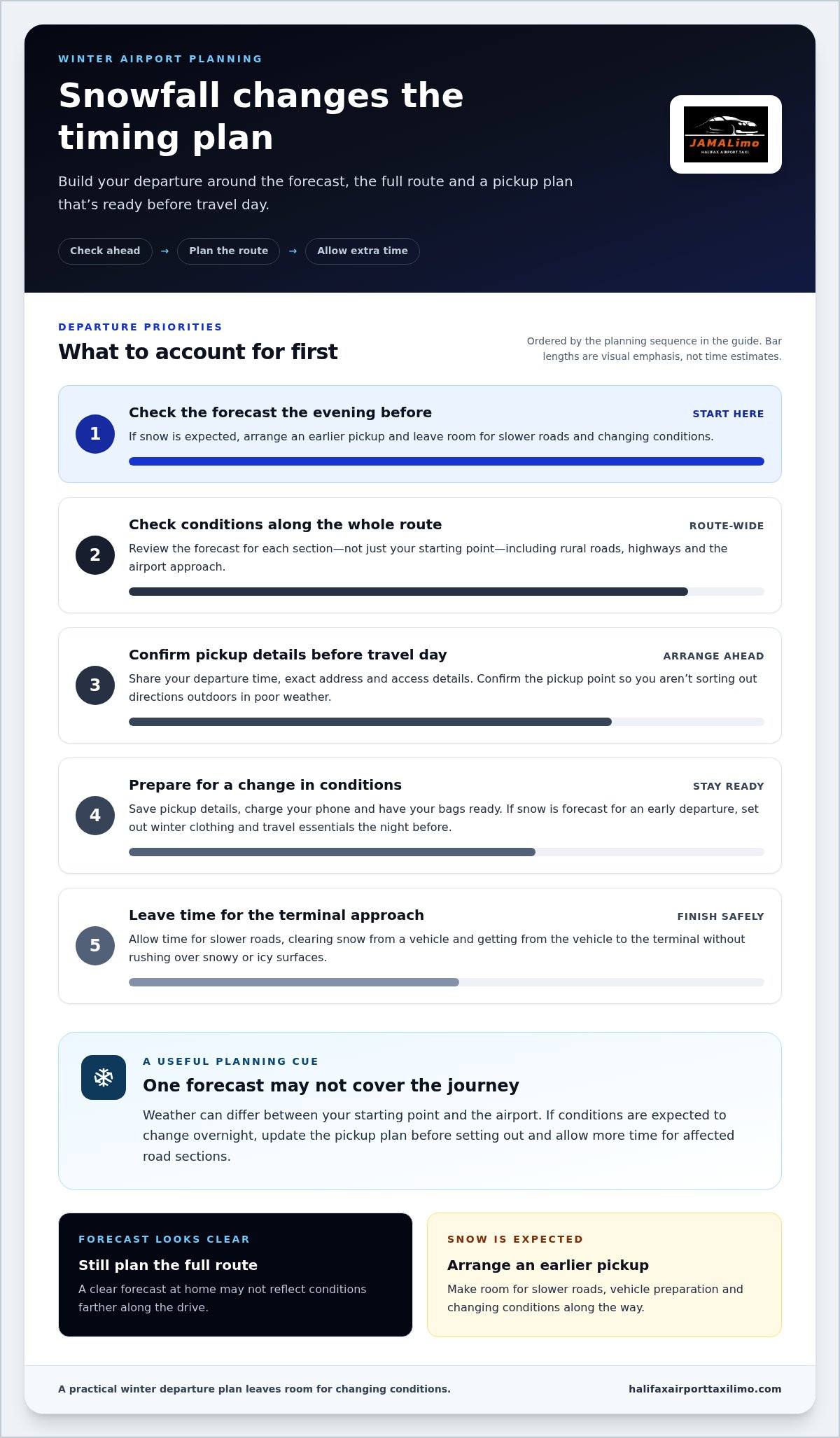
3. Planning departure pickup times around snowfall
Plan winter airport transportation before departure day. Check the forecast the evening before, then arrange an earlier pickup if snow is expected. This allows more time for slower roads, clearing snow from a vehicle and reaching the terminal. Consider the full route, not just conditions outside your home. A clear forecast at your starting point may not reflect weather farther along the drive.
Break the trip into practical sections: the drive from your address, any highway stretches and the airport approach. For example, a route that crosses rural roads and busy streets may face different conditions along the way. Review the forecast for each section, then adjust your departure plan if snow is expected later in the journey. Include the terminal and pickup or drop-off point in your directions.
Book winter airport transportation in advance, especially if your trip starts far from the airport. Share your departure time, exact address and access details, such as a long driveway or an entrance that may be hard to find in snowfall. Confirm the pickup point before travel day so you aren’t sorting out directions outdoors in poor weather.
For a trip that crosses provincial or local boundaries, check conditions across the entire route. Weather can differ between your starting point and the airport, so don’t rely on one forecast. If conditions are expected to change overnight, update your pickup plan before setting out and allow more time for affected road sections.
Keep the plan practical if snowfall begins during the journey. Save your pickup details, charge your phone and have your bags ready before the vehicle arrives. If snow is forecast for an early departure, set out winter clothing and travel essentials the night before. Allow time to get from the vehicle to the terminal without rushing over snowy or icy surfaces.
4. Arrival tracking and pickup adjustments
A flight’s arrival time can change while you’re in the air. Choose an airport taxi service with real-time flight tracking so pickup timing can reflect your actual landing. This helps align the driver’s arrival with the updated flight schedule rather than the original estimate. For a winter road airport pickup, timing matters when snow or traffic affects the drive to the terminal.
Check your airline’s app for delays before travelling to the airport or meeting an arriving passenger. Compare the latest arrival estimate with your pickup plan, then share any change with the driver. If the airline moves the flight earlier or later, updating the pickup time can help avoid unnecessary waiting at the terminal.
For Canadian airport weather, check forecasts for both the airport and the route. Consult airport travel updates and provincial road-condition services for closures or slowdowns. A clear forecast at home does not mean the highway or airport area has the same conditions.
Keep the key details together: airline, flight number, arrival airport and agreed meeting point. Provide accurate information when arranging the ride, then check it again if the airline changes the schedule. At the airport, follow signs for the designated pickup area. This helps avoid confusion between arrivals doors, parking areas and curbside zones.
Snow can affect the journey after landing, too. Keep your phone charged and notifications available, and tell your driver if baggage delays your exit. If you’re meeting someone, agree on a simple update, such as a message after they collect their bags. That gives both sides a clear next step without searching across the terminal.
For a coordinated pickup in Halifax, plan your airport transfer around your flight arrival and meeting point.
After a late winter arrival, let someone else drive when road conditions are poor. Airport pickup after a flight arrival is free for up to 2 hours after the passenger actually lands. Keep that window in mind when coordinating with the driver, and send an update if baggage or another delay affects when you reach the agreed meeting point.
JAMALimo: Local Halifax Airport Transfers
JAMALimo provides Local Halifax Airport Transfers for travellers who want a pre-arranged ride to or from Halifax Stanfield International Airport. Flat-rate pricing helps make the fare predictable, while licensed and insured drivers provide transportation in sedans, SUVs, and minivans. Choose a vehicle suited to your passengers and luggage, then plan the pickup around your flight and winter travel needs.
For a journey beyond the airport area, JAMALimo’s Nova Scotia Airport Transfers and regional car services connect airport travel with longer trips. These services can help when snow makes driving yourself less appealing or you’d rather leave the route to a professional driver.
Visit JAMALimo’s website to arrange an airport transfer.
Make your winter pickup plan before travel day
A calmer airport journey starts with a clear handoff plan. Before travelling, gather your flight details, pickup address, luggage needs and preferred meeting point. Share the relevant information when arranging transportation, then save it somewhere easy to access after landing. This simple step can reduce last-minute messages and help everyone know what happens next if plans change.
JAMALimo offers Local Halifax Airport Transfers and Nova Scotia Airport Transfers, as well as Inter Provincial Car Service for longer journeys. Choose the service that fits your route, then arrange the details around your winter road airport pickup. A clear plan gives you a practical starting point, whether you’re travelling home, heading elsewhere or meeting an arriving passenger.
Contact JAMALimo to plan your pickup and take the next step toward a more organized winter journey.
Frequently Asked Questions
How long should I allow for airport pickup during a Canadian snowstorm?
Allow enough time for the route, current snowfall and airport congestion instead of relying on the usual drive time. Check conditions before leaving and build a flexible buffer around your flight or meeting time. For example, a pickup involving a highway and city streets may need more time than a short local trip. Keep the person you’re meeting updated if your arrival estimate changes.
What should I do if snow or ice makes the airport pickup route unsafe?
Don’t continue along a route that feels unsafe. If you’re driving, pull over at a safe location away from traffic, then reassess conditions and contact the person waiting. If you’re a passenger, tell your driver you’re concerned and discuss a safer route or delay. Avoid stopping on a highway shoulder unless an emergency leaves no safer option, and keep your phone accessible.