
Group Sightseeing Transportation Costs and Shared Rides
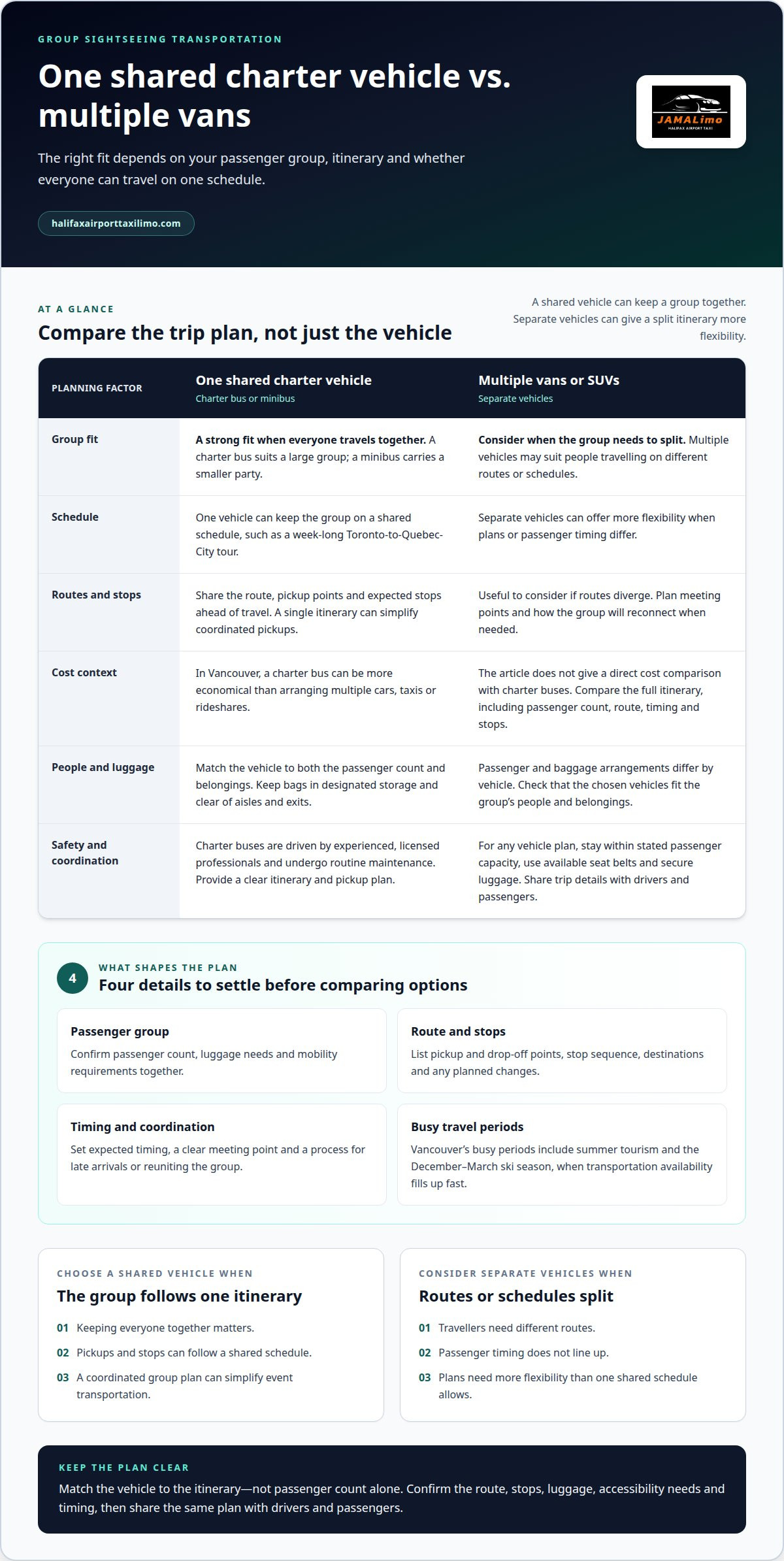
A charter bus isn’t automatically the better choice for every group sightseeing transportation plan. It can simplify a shared itinerary, while multiple vans or SUVs may suit a group travelling on different schedules or routes. In Vancouver, charter buses can be more economical for groups than arranging multiple cars, taxis or rideshares.
It makes sense to focus on cost, but the easiest trip to manage also depends on how many people are travelling together, where they need to go and whether everyone can follow one schedule. A single vehicle can keep the group together; separate vehicles can offer more flexibility when plans split.
This guide compares charter buses with multiple vans, explains what shapes shared travel costs and outlines practical safety considerations. It also covers when private car service or a tour may suit a smaller group or a more direct trip.
Key Takeaways
- Choose one shared vehicle when keeping everyone together matters; consider multiple vans when the group needs separate routes or schedules.
- Assess the full trip plan, including passenger count, stops, timing and distance, to understand what drives transportation costs.
- Give safety and dependable service priority by considering driver credentials, vehicle upkeep and how well the provider can follow your itinerary.
- For sightseeing and travel in Nova Scotia, explore whether Halifax Tours or airport and interprovincial transportation fits your group’s plans.
Charter safety and professional drivers
A charter bus suits a large group travelling together, while a minibus carries a smaller party. A tour bus is arranged around sightseeing. Choose based on passenger numbers, luggage, stops and whether everyone follows one itinerary. For a week-long Toronto-to-Quebec-City tour, one vehicle can keep the group on a shared schedule.
Safety starts with the driver and the vehicle. Charter buses are driven by experienced, licensed professionals, with many commercial drivers developing their skills and certifications through professional schools like Lone Star Truck Driving Academy, and vehicles undergo routine maintenance. A practical planning step is to share the route, pickup points and expected stops before travel. This helps drivers prepare for group logistics, including busy cruise-terminal arrivals or international visitors meeting at a designated location.
For safe group sightseeing transportation in Canada, plan within the vehicle’s stated passenger capacity, use available seat belts and secure luggage in designated storage areas. Keep bags clear of aisles and exits. Passenger and baggage arrangements can differ between a full-size charter bus, minibus and SUV, so match the vehicle to the group’s people and belongings, not passenger count alone.
For large events, coordinated pickups and a shared schedule can simplify transportation for hundreds of attendees. Organizers can plan the route around venues, meal stops and accessibility needs, then provide drivers with a clear itinerary. For a private outing, one pickup point and a named group lead help passengers board smoothly and avoid confusion at stops.
School and university trips need clear coordination between organizers, drivers and passengers. Set the pickup location, destination, return time and process for confirming everyone is aboard before departure. A campus visit, for example, can follow a planned sequence of stops at different buildings. Share luggage expectations and passenger details early so the vehicle and boarding plan fit the trip.
Group travel costs and shared transportation
Shared travel costs depend on group size, route, timing and stops. Compare the full itinerary, not just the vehicle type.
Shared transportation costs
In Vancouver, a charter bus can be more economical for a group than arranging multiple cars, taxis or rideshares. One vehicle can also reduce the number of cars on the road and lower carbon emissions. Compare how the group’s passenger count, luggage, pickup points and route shape the transport plan.
For a corporate outing, a shared schedule can simplify airport pickups and sightseeing tours. Local route knowledge can help organizers plan practical pickup locations and allow time between stops. Give the driver a clear itinerary, including destinations, group size and any planned changes, so the route can be tailored to the day.
Booking in busy travel seasons
Vancouver’s busy periods include summer tourism and the December-March ski season, when transportation availability fills up fast. For those dates, settle the group size, route, pickup points and schedule early in your planning. A corporate group with airport arrivals, for example, benefits from a coordinated meeting point and a clear plan for late arrivals.
Keep the itinerary practical: group nearby stops together and allow time for boarding and luggage. A driver familiar with the route can help the group move between planned stops without unnecessary detours.
Sightseeing transportation options
Canadian sightseeing can include charter buses, dinner cruises, steam train excursions, horse-drawn rides, air-boat rides and hot-air balloon rides. Statistics Canada identifies these as examples of scenic sightseeing transportation. A charter vehicle can provide door-to-door service on a custom schedule, while other options centre on a particular experience or route.
There isn’t one permit rule that applies to every Canadian city and national park. Requirements depend on the destination and activity, so include planned stops and vehicle access in the route planning. For a Halifax itinerary, private Halifax sightseeing tours may suit a smaller group seeking local stops.
Choosing a group transportation provider
Start with the route, passenger needs and purpose of the trip. For an airport transfer, provide arrival details, luggage expectations and a meeting point. For an island excursion, plan ferry connections and sightseeing stops as part of the itinerary. Match the vehicle and schedule to those details.
Accessibility options depend on the vehicle and route. Include mobility needs in the booking plan, such as space for mobility devices, boarding requirements and accessible stop locations. A sightseeing itinerary with several stops should allow passengers enough time to board and move between the vehicle and each destination. Choose for passengers’ needs, not capacity alone.
Compare the service plan against your actual itinerary. A corporate group travelling between a hotel and meeting venue may value a direct route and presentation-ready travel time. Some Vancouver corporate charter services offer onboard Wi-Fi and presentation equipment. For a family tour, clear pickup instructions and convenient stops may matter more.
- Confirm the pickup and drop-off points, including airport terminals or hotels.
- Share the route, stop sequence and expected timing before booking.
- Provide passenger count, luggage needs and mobility requirements together.
Consider how the itinerary will work if routes or passenger timing change. A cruise-terminal pickup, for example, needs a clearly communicated meeting point and a plan for reuniting the group. Give drivers and passengers the same itinerary, with each stop and the group contact identified.
Use the booking process to make sure trip details are clear. Confirm the route, vehicle fit, accessibility needs and timing. For international visitors, provide destination names and pickup instructions in writing. Clear information helps prevent confusion during airport transfers and sightseeing trips.
What group sightseeing transportation options are available in Canada?
Canadian groups can choose a charter vehicle, private car service or an activity-based excursion. The right option depends on group size, route, luggage and whether the journey itself is part of the experience.
A charter bus can provide door-to-door service on a custom schedule, suiting groups travelling together between attractions. Sedans, SUVs or minivans may better fit smaller parties or direct trips. For a private outing, arrange pickups and stops around the group’s itinerary rather than a fixed sightseeing loop.
Some Canadian excursions use a distinctive mode of travel. Statistics Canada includes dinner cruises, steam train excursions, horse-drawn rides, air-boat rides and hot-air balloon rides among scenic sightseeing transportation options. These experiences centre on a particular route or activity, so they work differently from a vehicle arranged to connect several destinations.
For a city overview, a sightseeing bus offers another format. A typical Vancouver sightseeing bus tour takes 90 minutes to 2 hours for a full loop without hopping off. That can help visitors see several areas in one outing. A custom vehicle plan is more suitable when the group needs specific pickup points, extra stops or a schedule built around an event.
- Choose a charter vehicle for shared, door-to-door travel between planned stops.
- Consider a private car, SUV or minivan when the group is smaller or the route is direct.
- Select an activity-based excursion when the journey itself is a central part of the outing.
For a Halifax itinerary, plan private sightseeing travel around your stops and the group’s schedule.
JAMALimo
JAMALimo provides private transportation for sightseeing, airport trips and longer journeys between provinces. Custom regional tours offer groups a way to explore with transportation arranged around the outing. Airport transfers can also help coordinate arrivals before the group begins its itinerary.
For travel beyond your local area, Inter Provincial Car Service suits passengers planning a longer route between provinces. Choose the trip type that matches your group’s plans, then share the destinations and pickup details when arranging transportation. This is a practical option when your itinerary calls for private car service rather than a large charter bus or activity-based excursion.
To discuss transportation for your group sightseeing plans, contact JAMALimo.
Plan a smoother trip for your group
Make your next decision practical: choose the itinerary first, then match transportation to its stops, timing and passenger needs. That gives your group a clear starting point for planning group sightseeing transportation, whether the day centres on Halifax or includes travel across Nova Scotia.
JAMALimo offers Local Halifax Airport Transfers and Nova Scotia Airport Transfers for groups coordinating arrivals, plus Inter Provincial Car Service for longer journeys. Share your pickup details, destinations and travel plans to help shape a suitable transportation arrangement. The right next step is a plan that fits how your group will actually travel, without adding unnecessary complexity.
Contact JAMALimo about group transportation to discuss your travel plans. With the route and priorities clear, you can move ahead with greater confidence and enjoy a more comfortable journey together.
Frequently Asked Questions
Is a charter bus better than renting multiple vans or SUVs?
A charter bus can be easier to coordinate when everyone follows the same route and schedule. Multiple vans or SUVs may work better when passengers need separate pickups or plan to split up. A group visiting an attraction together can travel as one party, while travellers with different drop-offs may prefer separate vehicles. Compare the itinerary, luggage and passenger needs before choosing.
How much does group sightseeing transportation cost in Canada?
There isn’t one price for every Canadian group trip. The cost depends on the route, vehicle, schedule, passenger count, stops and trip duration, and is provided after a quote request. A direct transfer between two destinations has different requirements from a day with several sightseeing stops. Share the full itinerary to receive a quote that reflects the actual trip.
What is the best transportation for a large sightseeing group?
A charter bus is a practical option when a large group needs to travel together. For group sightseeing transportation, consider luggage, boarding needs and route as well as passenger capacity. One bus can simplify coordination for a planned visit to a venue, attraction or event. If the itinerary divides passengers between destinations, separate vehicles may make the schedule easier to manage.
How far in advance should you book transportation for a sightseeing group?
Book group sightseeing transportation once your travel date, passenger count and main stops are settled, especially if the trip falls during a busy travel period. Earlier planning gives the organizer time to coordinate arrival details, boarding locations and schedule changes. For example, a group arriving on separate flights should establish a meeting point before finalizing its pickup plan. Include seasonal dates in the initial planning.
What information is needed to get a group transportation quote?
To arrange group sightseeing transportation, provide the travel date, passenger count, pickup and drop-off locations, planned stops and approximate schedule. Include luggage requirements and mobility needs, as these affect vehicle choice and boarding arrangements. For an airport pickup, add flight arrival details and a clear meeting location. A complete itinerary helps ensure the quote reflects the trip, not just part of the route.
How do you plan a group sightseeing itinerary with transportation stops and pickup points?
Start with the group’s main destination, then arrange stops in a practical order. Choose easy-to-identify pickup points, such as a hotel entrance or venue reception area. Allow time for boarding, luggage and travel between attractions. Give everyone the same written itinerary, including stop names, pickup instructions and the return point, so the group can follow one schedule.