
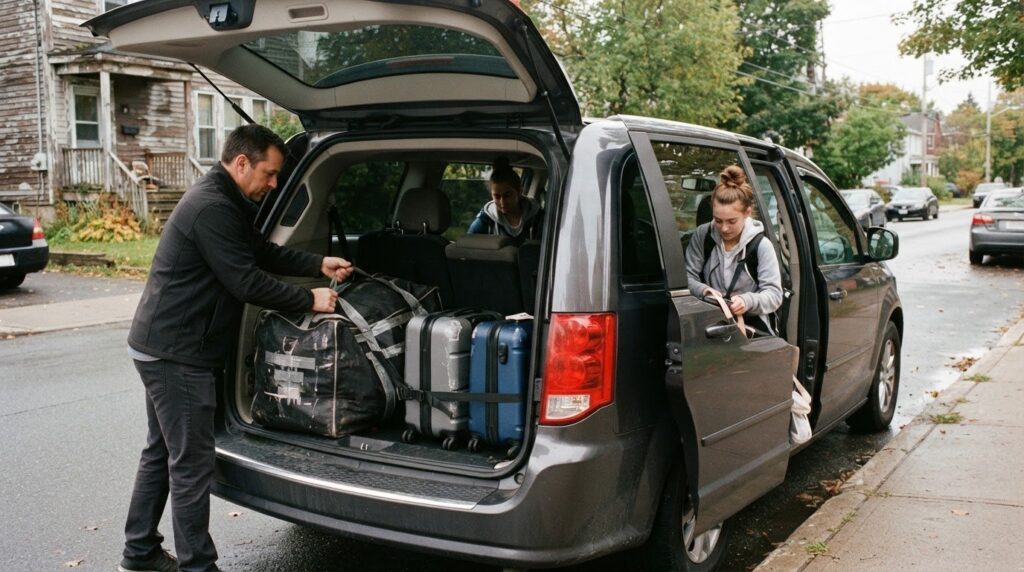
Student Car Service for Extra Bags and Gear
Room for an instrument case or sports gear depends on the vehicle, the number of passengers and the size of each item. For a student car service with extra bags, share the passenger count and baggage details when booking so the ride can be planned around the group and its belongings. Bulky equipment can take up more space than standard luggage.
Plan the gear alongside the ride, not at pickup. This guide explains how to describe bags and equipment, what affects the fare, and how to arrange pickup and drop-off in Canada. You’ll also learn which details to provide in advance so the trip accounts for both passengers and their belongings.
Key Takeaways
- Match the vehicle to both the passenger count and the shape and size of the gear.
- Share baggage details before the ride so the vehicle and any applicable extra charges can be addressed in advance.
- Plan pickup and drop-off details around where passengers and luggage can be safely collected and unloaded.
- For airport trips or travel between provinces, explore the relevant JAMALimo car service for a ride planned around your passengers and bags.
Choosing a vehicle based on passenger and gear needs
Choose a vehicle by counting passengers and considering each bag’s size and shape. Student transportation needs enough seats and secure space for equipment.
Passenger and Bag Capacity
Capacity means more than having a seat for every student. A guitar case, hockey bag or science project can take up space that might otherwise hold luggage. Consider how each item will fit while leaving passengers room to sit comfortably. Count backpacks and smaller personal items, too. A vehicle that suits students carrying backpacks may not fit the same group with bulky sports equipment.
Handling Bags Beyond Capacity
If the bags won’t fit in the vehicle, plan another arrangement before departure. Reduce the load, choose a more suitable vehicle or arrange separate transportation for the gear. Don’t force bags into passenger space or block access. Describe awkward items, such as long instrument cases, when booking. Accurate details help plan for both passengers and belongings.
Vehicle choice should also account for safe storage. Passenger vehicles used for student transportation must have seat belts worn by all occupants. Bags should be secured so they don’t shift or interfere with passengers. For example, place a rigid equipment case where it won’t slide into seating space during the trip.
In Canada, 15-passenger vans are not prohibited, but they are associated with higher safety risks, especially rollovers. A larger vehicle should suit the group and its gear, rather than simply offering extra seats. Before departure, inspect visible items such as tires, lights, doors and seat belts. A clear cabin makes it easier to see whether bags are safely stowed.
Advance notice for additional baggage
Share baggage details when requesting the ride, rather than waiting until pickup. A clear description helps plan transportation for passengers and their belongings. Include the number of students, the number of bags and any items that differ from ordinary luggage. A violin case, hockey bag or folded project display can affect how everything fits.
Describe bulky gear by its approximate dimensions or shape, especially if it cannot be compressed or stacked. Say whether a case is rigid, whether a bag has wheels, and whether one student has several items. For example, “one student has a large instrument case and a backpack” gives a clearer picture than “extra luggage.”
- Count passengers and bags separately, including carry-on items.
- Name unusual equipment, such as skis, a cello case or sports kit.
- Give approximate measurements for long or wide items.
- Share the pickup location, destination and travel date.
For a school trip, have one organizer collect details from each student before sending the request. A simple list prevents shared items, such as team equipment, from being counted twice or missed. If the group’s baggage changes after booking, send an updated count and description as soon as possible so the transportation plan reflects the current details.
Explain how the group will use the vehicle, too. A student with a backpack has different loading needs from one bringing equipment for a performance. Note which items must stay accessible during the trip, such as medication or a laptop, and which can be packed away. Keep the description factual and concise.
For airport travel, include flight details alongside the baggage count so pickup arrangements match the trip. Organizers planning a student arrival can use airport pickup planning as part of the same preparation. Early, accurate details make it easier to account for students, luggage and the route to the destination.
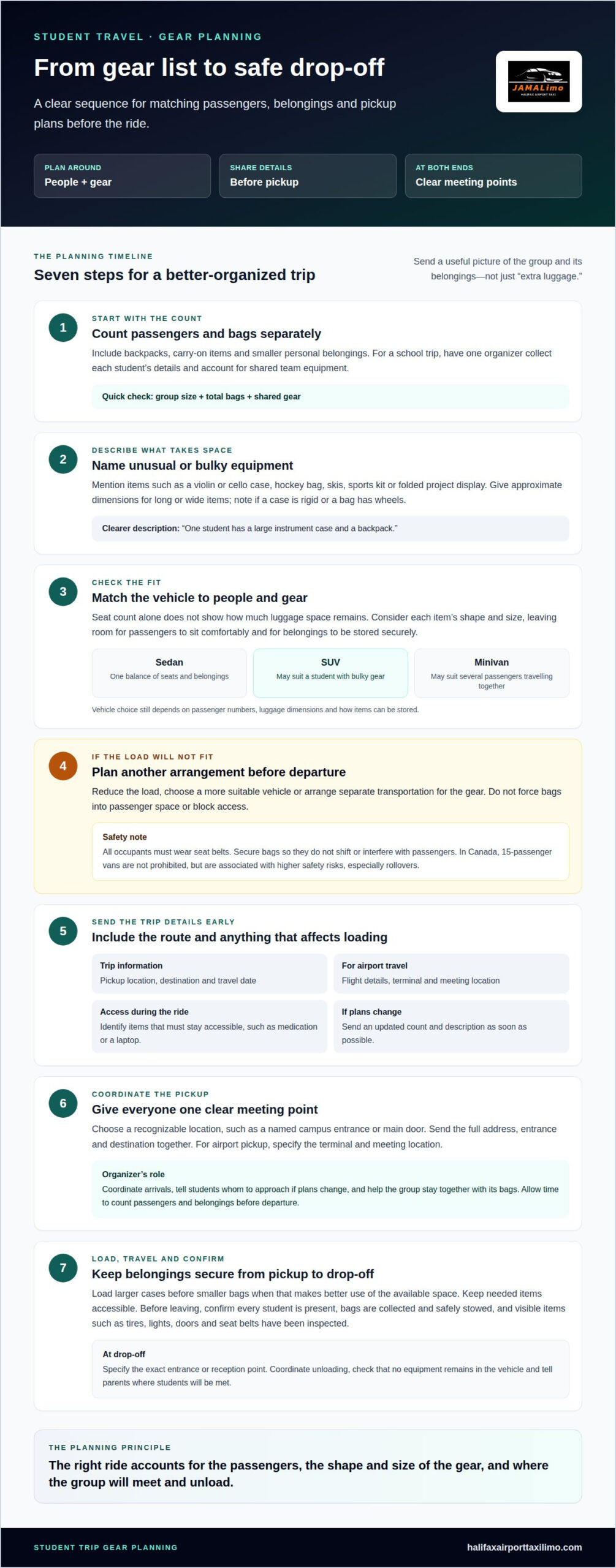
Pickup and drop-off procedures
Choose one pickup point that every student and parent can identify, such as a named campus entrance or a building’s main door. Include the full address and a useful landmark in the trip instructions. For an airport pickup, provide the terminal and meeting location details for the journey. One clear meeting point helps prevent students from waiting at different entrances.
For a school group, appoint one organizer to coordinate arrivals and communicate with the driver. Parents should know the pickup time, meeting point and destination, while students should know whom to approach if plans change. Give the organizer a way to contact the group, and ask students to stay together with their bags rather than spreading across a busy pickup area.
- Send the pickup address, entrance and destination in one message.
- Tell students which person is coordinating the group.
- Keep bulky cases together so they can be loaded in a planned order.
- Allow time to count passengers and belongings before departure.
At pickup, load larger cases before smaller bags when that makes better use of the available space. Keep items needed during the ride accessible, such as a coat or school folder. A student carrying a cello case may need to board before backpacks are loaded, so the case can be positioned without delaying other passengers.
Before leaving, the organizer can confirm that every student is present and the group’s bags have been collected. At drop-off, specify the exact destination entrance, not just the school or residence name. A campus with several buildings, for example, needs a specific residence or reception point. The organizer should coordinate unloading, check that no equipment remains in the vehicle and tell parents where students will be met. Clear instructions at both ends make the transfer easier to follow.
Do student car services provide larger vehicles for extra luggage?
Some student trips need more room, but a larger vehicle is not automatically the right fit. The choice depends on passenger numbers, luggage dimensions and how items can be stored. A student travelling alone with a suitcase has different needs from a small group carrying instrument cases and sports bags.
Vehicle options include sedans, SUVs and minivans, each offering a different balance of passenger seating and space for belongings. An SUV may suit a student with bulky gear, while a minivan may suit several passengers travelling together. The number of seats alone doesn’t show how much usable luggage space remains.
To help plan the right vehicle for the trip, send these details when arranging transportation:
- How many students are travelling, and how many bags each person has.
- Which items are unusually long, rigid or awkward to stack.
- Whether any gear must remain accessible during the ride.
- The pickup and destination, including whether the trip is to an airport.
This information helps determine when a larger vehicle may be more suitable. If the gear still exceeds the available space, make another plan, such as reducing luggage or arranging separate transportation for equipment. Don’t wedge bags into passenger seating or place them where they can obstruct movement.
In Canada, 15-passenger vans are not prohibited, but they are associated with higher safety risks, especially rollovers. A larger vehicle should therefore be chosen for a clear capacity need, not simply because it looks roomier. For a student airport trip, organize the passenger and baggage details together before booking. Arrange a student airport transfer with the trip’s luggage needs in mind.
JAMALimo: Inter Provincial Car Service
JAMALimo provides Inter Provincial Car Service for students travelling between provinces and Student’s Airport Taxi for airport trips. These services can suit students travelling alone or with a group and their belongings.
When arranging a ride, share the passenger count, route and details of bulky bags or equipment. A guitar case, sports bag or several suitcases can affect which vehicle suits the trip. Clear information helps plan transportation around the journey and its baggage needs.
For a student trip with extra bags, contact JAMALimo to discuss the route and baggage details.
Make your next student trip easier to plan
Before arranging a ride, gather the travel details: who is travelling, what they’re carrying and where they need to go. A clear plan accounts for passengers and gear from the start. For students travelling with extra luggage, a student car service for extra bags can be a practical part of the plan.
JAMALimo offers Inter Provincial Car Service and Student’s Airport Taxi. Choose the option that fits the journey, then share the baggage details when arranging transportation. A specific request gives the trip a clear starting point and helps keep arrangements organized.
Contact JAMALimo about extra bags to discuss your student trip and travel plans. With the details in hand, you can take the next step toward a more orderly journey.
Frequently Asked Questions
Is there room for instruments and sports gear?
Often, but the available space depends on the vehicle, passenger count and equipment dimensions. A compact instrument, such as a flute, takes up less room than a double bass or a goalie’s equipment bag. Give the item’s approximate length and shape when booking so the transportation plan accounts for awkward gear, not just the number of suitcases.
Do student car services charge extra for additional bags or luggage?
JAMALimo’s airport taxi rides have flat-rate pricing, with no hidden fees and no surge fees. For inter-provincial trips, share the route and baggage details when requesting a custom quote. Confirm the fare terms for your trip when booking, rather than assuming extra bags are included or cost extra.
How many bags are included in a student car service booking?
There isn’t one bag allowance that applies to every student car booking. What fits depends on the vehicle’s available storage, the number of passengers and the bags’ dimensions. A group with several small backpacks may fit differently from the same group carrying hard-shell cases. Share the total bag count, including personal items, when requesting a ride.
What are the extra-bag fees for student transportation services in Canada?
There is no single extra-bag fee that applies across Canada. Any charge depends on the service’s own fare terms and the trip details, including vehicle choice and the baggage being carried. Don’t rely on a general online estimate for your booking. Review the quoted trip terms, and make sure any baggage-related charge is clear before completing the reservation.
Are there luggage size or weight limits for student car services?
Limits depend on the vehicle and the space available once passengers are seated. A long item may be difficult to place even if it’s light, while a compact, heavy case may be easier to stow. Provide approximate dimensions and note unusual shapes, such as a narrow poster tube or a wide keyboard case. This helps account for practical space constraints before travel.
How should students request space for extra bags when booking a ride?
Include baggage details in the booking request rather than waiting until pickup. State the passenger count, total bags, bulky items and approximate dimensions. For a group booking, have one organizer combine everyone’s details and identify shared equipment separately. If the load changes later, send the revised information before travel so the arrangements reflect what students will actually bring.